" width="28.00000763211824px"><path d="M 14 0 C 21.732 0 28 6.263 28 13.99 C 28 16.012 27.569 17.933 26.797 19.667 L 22.334 14.878 L 21.189 16.033 L 16.055 10.371 L 11.934 13.793 L 9.766 14.756 L 7.003 18.491 L 5.368 19.189 L 3.148 22.828 C 1.109 20.333 -0.003 17.211 0 13.99 C 0 6.263 6.268 0 14 0 Z" fill="rgb(0, 82, 130)" height="22.828052812586776px" id="ARXNZiA5o" width="28.00000763211824px"/><path d="M 20.204 6.332 C 17.42 10.104 12.929 12.23 8.244 11.994 L 9.713 4.805 L 12.919 11.111 L 14.01 7.827 L 15.358 7.189 L 14.751 3.421 L 13.238 0 L 16.444 3.725 L 20.193 6.332 Z M 7.806 11.962 C 6.641 11.868 5.493 11.628 4.388 11.249 L 7.279 0.707 L 7.987 6.55 L 7.807 11.962 Z M 1.23 9.397 C 0.805 9.099 0.395 8.781 0 8.445 L 1.661 4.491 L 1.23 9.402 Z" fill="rgb(23, 54, 69)" height="12.011869337409735px" id="illNHtIN1" transform="translate(5 15.988)" width="20.204000434875468px"/><path d="M 14 0 C 21.732 0 28 6.263 28 13.99 C 28 16.012 27.569 17.933 26.797 19.667 L 22.334 14.878 L 21.189 16.033 L 16.055 10.371 L 11.934 13.793 L 9.766 14.756 L 7.003 18.491 L 5.368 19.189 L 3.148 22.828 C 1.109 20.333 -0.003 17.211 0 13.99 C 0 6.263 6.268 0 14 0 Z" fill="rgb(23, 54, 69)" height="22.828052812586776px" id="gFBSCTcnP" width="28.00000763211824px"/></g><path d="M 0 11.796 L 0 0.159 L 4.659 0.159 C 5.516 0.159 6.23 0.287 6.802 0.54 C 7.373 0.794 7.804 1.146 8.092 1.597 C 8.379 2.043 8.524 2.559 8.524 3.142 C 8.524 3.597 8.433 3.996 8.251 4.341 C 8.069 4.682 7.819 4.962 7.501 5.182 C 7.186 5.398 6.826 5.551 6.421 5.642 L 6.421 5.755 C 6.861 5.773 7.289 5.902 7.665 6.131 C 8.055 6.362 8.372 6.686 8.615 7.102 C 8.857 7.515 8.979 8.007 8.979 8.579 C 8.979 9.197 8.825 9.748 8.518 10.233 C 8.215 10.714 7.765 11.094 7.171 11.375 C 6.576 11.655 5.843 11.795 4.972 11.795 L 0 11.795 Z M 2.461 9.784 L 4.466 9.784 C 5.152 9.784 5.652 9.654 5.966 9.392 C 6.281 9.127 6.438 8.774 6.438 8.335 C 6.438 8.013 6.36 7.729 6.205 7.483 C 6.043 7.231 5.812 7.03 5.54 6.903 C 5.256 6.763 4.917 6.693 4.523 6.693 L 2.461 6.693 Z M 2.461 5.029 L 4.284 5.029 C 4.593 5.035 4.899 4.974 5.182 4.852 C 5.434 4.743 5.65 4.566 5.807 4.341 C 5.963 4.121 6.041 3.859 6.041 3.551 C 6.041 3.131 5.891 2.792 5.591 2.534 C 5.296 2.277 4.876 2.148 4.33 2.148 L 2.461 2.148 Z M 10.259 11.796 L 10.259 0.159 L 12.719 0.159 L 12.719 9.767 L 17.708 9.767 L 17.708 11.796 Z M 26.206 0.159 L 28.666 0.159 L 28.666 7.716 C 28.666 8.564 28.463 9.307 28.057 9.943 C 27.656 10.58 27.093 11.076 26.37 11.432 C 25.646 11.784 24.804 11.96 23.842 11.96 C 22.876 11.96 22.031 11.784 21.308 11.432 C 20.584 11.076 20.021 10.58 19.62 9.943 C 19.218 9.306 19.018 8.564 19.018 7.716 L 19.018 0.159 L 21.478 0.159 L 21.478 7.505 C 21.478 7.949 21.574 8.343 21.767 8.688 C 21.964 9.032 22.241 9.304 22.597 9.5 C 22.953 9.697 23.368 9.796 23.842 9.796 C 24.318 9.796 24.734 9.697 25.086 9.5 C 25.432 9.313 25.718 9.031 25.91 8.688 C 26.107 8.343 26.205 7.949 26.205 7.505 L 26.205 0.16 Z M 30.369 11.796 L 30.369 0.159 L 38.211 0.159 L 38.211 2.188 L 32.83 2.188 L 32.83 4.96 L 37.807 4.96 L 37.807 6.989 L 32.83 6.989 L 32.83 9.767 L 38.234 9.767 L 38.234 11.796 Z M 45.333 0.159 L 48.145 9 L 48.253 9 L 51.072 0.159 L 53.799 0.159 L 49.788 11.796 L 46.617 11.796 L 42.6 0.159 Z M 55.338 11.796 L 52.702 11.796 L 56.719 0.159 L 59.89 0.159 L 63.902 11.796 L 61.265 11.796 L 58.35 2.818 L 58.259 2.818 Z M 55.174 7.222 L 61.401 7.222 L 61.401 9.142 L 55.174 9.142 Z M 74.702 4.233 L 72.214 4.233 C 72.175 3.932 72.081 3.641 71.935 3.375 C 71.799 3.126 71.616 2.906 71.396 2.727 C 71.169 2.546 70.911 2.407 70.634 2.319 C 70.335 2.221 70.022 2.173 69.708 2.176 C 69.106 2.176 68.581 2.326 68.134 2.625 C 67.687 2.921 67.34 3.352 67.095 3.92 C 66.848 4.485 66.725 5.17 66.725 5.977 C 66.725 6.807 66.848 7.503 67.095 8.068 C 67.344 8.632 67.693 9.059 68.14 9.346 C 68.587 9.635 69.104 9.778 69.691 9.778 C 70.021 9.778 70.325 9.735 70.606 9.647 C 70.878 9.566 71.134 9.438 71.361 9.267 C 71.581 9.097 71.766 8.887 71.907 8.648 C 72.055 8.406 72.157 8.129 72.214 7.818 L 74.702 7.829 C 74.636 8.37 74.473 8.893 74.219 9.375 C 73.96 9.875 73.611 10.324 73.191 10.699 C 72.763 11.085 72.252 11.392 71.657 11.619 C 71.066 11.843 70.397 11.954 69.651 11.954 C 68.614 11.954 67.685 11.72 66.867 11.25 C 66.053 10.781 65.409 10.1 64.935 9.21 C 64.465 8.32 64.231 7.243 64.231 5.977 C 64.231 4.708 64.469 3.629 64.946 2.739 C 65.424 1.849 66.072 1.171 66.889 0.705 C 67.708 0.235 68.628 0 69.651 0 C 70.287 -0.006 70.92 0.09 71.526 0.284 C 72.106 0.473 72.619 0.75 73.066 1.114 C 73.515 1.477 73.887 1.927 74.157 2.438 C 74.441 2.96 74.623 3.559 74.702 4.233 Z M 77.934 11.796 L 75.297 11.796 L 79.314 0.159 L 82.485 0.159 L 86.497 11.796 L 83.86 11.796 L 80.945 2.818 L 80.854 2.818 Z M 77.769 7.222 L 83.997 7.222 L 83.997 9.142 L 77.769 9.142 Z M 85.712 2.188 L 85.712 0.159 L 95.269 0.159 L 95.269 2.188 L 91.707 2.188 L 91.707 11.796 L 89.275 11.796 L 89.275 2.188 Z M 98.984 0.159 L 98.984 11.796 L 96.523 11.796 L 96.523 0.159 Z M 111.381 5.977 C 111.381 7.246 111.141 8.326 110.66 9.216 C 110.183 10.106 109.531 10.786 108.705 11.256 C 107.883 11.721 106.959 11.954 105.932 11.954 C 104.898 11.954 103.97 11.72 103.148 11.25 C 102.326 10.781 101.677 10.1 101.199 9.21 C 100.722 8.32 100.483 7.243 100.483 5.977 C 100.483 4.708 100.722 3.629 101.199 2.739 C 101.677 1.849 102.326 1.171 103.148 0.705 C 103.97 0.235 104.898 0 105.932 0 C 106.959 0 107.883 0.235 108.705 0.705 C 109.531 1.171 110.183 1.849 110.66 2.739 C 111.141 3.629 111.381 4.708 111.381 5.977 Z M 108.887 5.977 C 108.887 5.156 108.764 4.462 108.517 3.898 C 108.275 3.334 107.932 2.906 107.489 2.614 C 107.046 2.322 106.527 2.176 105.932 2.176 C 105.338 2.176 104.819 2.322 104.375 2.614 C 103.932 2.905 103.588 3.334 103.341 3.898 C 103.099 4.462 102.978 5.156 102.978 5.977 C 102.978 6.799 103.099 7.493 103.341 8.056 C 103.588 8.621 103.932 9.05 104.375 9.341 C 104.819 9.633 105.338 9.778 105.932 9.778 C 106.527 9.778 107.046 9.633 107.489 9.341 C 107.932 9.05 108.275 8.621 108.517 8.057 C 108.764 7.493 108.887 6.799 108.887 5.977 Z M 122.618 0.159 L 122.618 11.796 L 120.492 11.796 L 115.43 4.472 L 115.344 4.472 L 115.344 11.796 L 112.884 11.796 L 112.884 0.159 L 115.043 0.159 L 120.066 7.477 L 120.169 7.477 L 120.169 0.159 Z M 130.643 3.506 C 130.598 3.047 130.403 2.692 130.057 2.438 C 129.713 2.184 129.245 2.057 128.655 2.057 C 128.253 2.057 127.914 2.114 127.637 2.228 C 127.361 2.337 127.149 2.491 127.001 2.687 C 126.858 2.881 126.782 3.117 126.785 3.358 C 126.773 3.549 126.819 3.739 126.916 3.904 C 127.014 4.059 127.149 4.193 127.319 4.307 C 127.49 4.417 127.686 4.514 127.91 4.597 C 128.134 4.676 128.372 4.744 128.626 4.801 L 129.672 5.051 C 130.179 5.165 130.645 5.317 131.069 5.506 C 131.493 5.695 131.861 5.928 132.172 6.205 C 132.482 6.481 132.722 6.807 132.893 7.182 C 133.068 7.556 133.156 7.987 133.16 8.471 C 133.156 9.184 132.974 9.801 132.615 10.323 C 132.258 10.843 131.743 11.246 131.069 11.534 C 130.398 11.818 129.59 11.96 128.643 11.96 C 127.703 11.96 126.886 11.816 126.188 11.528 C 125.495 11.24 124.954 10.814 124.563 10.25 C 124.176 9.682 123.974 8.979 123.955 8.142 L 126.336 8.142 C 126.363 8.532 126.474 8.858 126.671 9.12 C 126.872 9.377 127.139 9.572 127.472 9.705 C 127.838 9.838 128.225 9.904 128.615 9.898 C 129.031 9.898 129.393 9.837 129.7 9.716 C 130.011 9.595 130.251 9.426 130.421 9.21 C 130.59 8.999 130.68 8.736 130.677 8.466 C 130.677 8.205 130.599 7.985 130.444 7.807 C 130.293 7.629 130.069 7.477 129.774 7.352 C 129.426 7.209 129.067 7.095 128.7 7.011 L 127.432 6.693 C 126.452 6.455 125.677 6.082 125.109 5.573 C 124.541 5.067 124.258 4.383 124.262 3.523 C 124.258 2.818 124.446 2.203 124.825 1.677 C 125.207 1.15 125.732 0.739 126.398 0.443 C 127.066 0.148 127.823 0 128.671 0 C 129.535 0 130.289 0.148 130.932 0.443 C 131.581 0.739 132.084 1.15 132.445 1.676 C 132.804 2.203 132.99 2.813 133.001 3.506 Z" fill="rgb(23, 54, 69)" height="11.960000006921526px" id="Bt8v5JkP3" transform="translate(40.5 8.5)" width="133.1599985331248px"/></svg>)

Icelandic Grit and Determination on the Way to the Golden Circle
There are two ways to begin your journey from Keflavík Airport towards Iceland's Golden Circle. One takes you along the familiar route through the Reykjavík area. The other takes you through a landscape where Icelanders have spent the past few years doing something rather extraordinary: rebuilding roads that volcanoes keep trying to bury.

When nature has other plans
Icelanders have always had a complicated relationship with nature. We love it, depend on it and are immensely proud of it. But we also know that it doesn't always cooperate.
We live with fierce Atlantic storms, earthquakes, glaciers, volcanic eruptions and landscapes that are constantly being reshaped. Over the centuries, we have learned that there is little point in trying to control nature. What we can do is prepare, adapt and, when necessary, rebuild.
Nowhere has that spirit been more visible in recent years than on the Reykjanes Peninsula, not far from Keflavík International Airport.
In November 2023, a series of powerful earthquakes and dramatic land subsidence forced the evacuation of Grindavík, a fishing town on Iceland's southwest coast. Volcanic eruptions followed, sending rivers of molten rock across the landscape, threatening homes, roads and important infrastructure.
For the people of Grindavík, the consequences have been profound. Families were displaced, businesses disrupted and an entire community faced an uncertain future.
But alongside the hardship, another story began to unfold. It was a story of engineers, construction workers, emergency responders and ordinary Icelanders determined to keep essential infrastructure functioning, even as the ground beneath them was changing.
The volcano took the road. So we built another one.
Imagine building a road, only to watch a volcanic eruption bury it under metres of fresh lava.
Then imagine rebuilding that road, knowing perfectly well that another eruption might destroy it again.
That is precisely the challenge Icelandic road engineers and construction crews have faced near Grindavík.
During the eruptions of 2024, lava repeatedly crossed Grindavíkurvegur, the main road connecting the town with the rest of the peninsula. Access roads to the Blue Lagoon and nearby infrastructure were also affected.
The response was remarkable. Working with emergency authorities and engineers, construction crews created new road alignments, built protective barriers and laid new road sections across recently formed lava fields.
In some places, they were working in a landscape that had not even existed a few weeks earlier.
And when another eruption sent lava across the roads again, the work began once more.

There is something wonderfully Icelandic about this response.
The volcano has buried the road? Well, we had better build another one.
Not because we believe we can defeat a volcano. We certainly cannot. But because people need roads, communities need connections and life must continue wherever it is safe to do so.
It is a practical kind of determination, born from generations of living in a country where nature occasionally reminds us who is in charge.
A landscape that tells a story
For travellers arriving at Keflavík Airport, the Reykjanes Peninsula offers a remarkable introduction to Iceland.
Much of the landscape is covered in lava fields, some centuries old and others formed only recently. The contrast between the black rock, the Atlantic coastline, distant mountains and carefully engineered roads is striking.
Where access is permitted, the area around Grindavík and the recent lava fields offers an opportunity to see the effects of volcanic activity at close range. The rebuilt roads and protective structures also tell a distinctly human story about the effort required to live alongside these powerful natural forces.
There is no need to witness an actual eruption to appreciate the power of Iceland's geology. Sometimes the evidence is more impressive after the event: a road disappearing beneath a lava field, a new road rising across it, or an enormous protective embankment built to redirect future lava flows.
It is nature's extraordinary power and human ingenuity, side by side.
From volcanic lava to erupting geysers
And here is where the journey becomes particularly interesting.
Continue east towards the Golden Circle and you encounter another expression of the same restless geology.
At the Geysir geothermal area, boiling water and steam rise from the ground, while Strokkur erupts regularly, sending a spectacular column of hot water into the air.
The experience could hardly be more different from the recent lava fields near Grindavík. Here, the energy beneath Iceland is something visitors gather to admire, photograph and marvel at.
Yet both landscapes are reminders that Iceland is geologically very much alive.

In the space of a single journey, you can see how volcanic activity reshapes the land, how Icelanders respond to it and how geothermal energy creates some of the country's most celebrated natural attractions.
There are few places in the world where the relationship between people and the forces beneath their feet is quite so visible.
Two ways to begin your Golden Circle adventure
So, which route should you take from Keflavík Airport?
The conventional choice is to follow Reykjanesbraut towards Reykjavík and continue east towards the Golden Circle. It is straightforward and generally the most practical option, particularly if you are arriving late or want to reach your accommodation without unnecessary detours.
But if you have time, enjoy scenic driving and road conditions permit, consider exploring the Reykjanes Peninsula and the Grindavík area before continuing east along the southern coast.
The southern route takes you through striking volcanic scenery and can connect with Suðurstrandarvegur towards Þorlákshöfn and the Golden Circle. It is a longer journey, but one that can make the drive itself part of your Icelandic experience.
Importantly, volcanic activity and access restrictions can change. Always check current road conditions and official safety information before choosing this route. Never enter closed areas or stop on roads where parking is prohibited.
And then, slow down
After the dramatic landscapes of Reykjanes and the geothermal wonders of Geysir, there is something rather appealing about arriving in the quieter countryside of South Iceland.
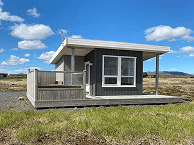
At Blue Hotel Fagrilundur and Blue View Cabins in Reykholt, you are in the heart of the Golden Circle, with Gullfoss, Geysir, Þingvellir and many other experiences within easy reach.
It is a place to settle in, explore at your own pace and discover that Iceland's most memorable experiences are not always confined to its most famous attractions.
Sometimes the journey itself tells an equally remarkable story.

And perhaps that is one of the things we Icelanders are most proud of. We know we cannot always change what nature has in store for us. But we can decide how we respond.


" width="157px"><path d="M 0 0 L 157 0 L 157 31.739 L 0 31.739 Z" fill="transparent" height="31.739242019607804px" id="XZLUe0axV" transform="translate(0 0)" width="156.9999896705932px"/><path d="M 0 0.151 L 4.244 0.151 C 5.294 0.151 6.133 0.441 6.664 0.96 C 7.081 1.388 7.286 1.895 7.286 2.529 L 7.286 2.553 C 7.286 3.604 6.718 4.189 6.061 4.557 C 7.123 4.95 7.811 5.572 7.811 6.809 L 7.811 6.833 C 7.811 8.517 6.441 9.368 4.364 9.368 L 0.006 9.368 L 0.006 0.151 Z M 5.342 2.849 C 5.342 2.227 4.847 1.859 3.96 1.859 L 1.883 1.859 L 1.883 3.912 L 3.833 3.912 C 4.757 3.912 5.342 3.598 5.342 2.873 Z M 4.28 5.529 L 1.889 5.529 L 1.889 7.66 L 4.358 7.66 C 5.294 7.66 5.867 7.316 5.867 6.61 L 5.867 6.586 C 5.867 5.928 5.372 5.535 4.286 5.535 Z M 9.362 0.151 L 11.3 0.151 L 11.3 7.6 L 15.948 7.6 L 15.948 9.374 L 9.362 9.374 Z M 16.95 5.433 L 16.95 0.151 L 18.9 0.151 L 18.9 5.366 C 18.9 6.912 19.673 7.721 20.952 7.721 C 22.232 7.721 23.017 6.948 23.017 5.439 L 23.017 0.145 L 24.954 0.145 L 24.954 5.348 C 24.954 8.137 23.397 9.501 20.928 9.501 C 18.459 9.501 16.95 8.119 16.95 5.421 Z M 26.91 0.151 L 33.84 0.151 L 33.84 1.889 L 28.836 1.889 L 28.836 3.863 L 33.242 3.863 L 33.242 5.596 L 28.836 5.596 L 28.836 7.636 L 33.9 7.636 L 33.9 9.368 L 26.91 9.368 Z M 38.591 0.151 L 40.746 0.151 L 43.226 6.761 L 45.707 0.151 L 47.808 0.151 L 44.059 9.435 L 42.339 9.435 Z M 50.977 0.085 L 52.776 0.085 L 56.742 9.368 L 54.702 9.368 L 53.838 7.268 L 49.848 7.268 L 48.985 9.368 L 46.999 9.368 Z M 53.144 5.541 L 51.852 2.415 L 50.549 5.541 Z M 57.062 4.787 L 57.062 4.763 C 57.062 2.143 59.036 0 61.861 0 C 63.593 0 64.637 0.567 65.495 1.419 L 64.251 2.849 C 63.527 2.191 62.796 1.787 61.843 1.787 C 60.249 1.787 59.096 3.115 59.096 4.739 L 59.096 4.763 C 59.096 6.386 60.225 7.739 61.843 7.739 C 62.917 7.739 63.575 7.31 64.312 6.634 L 65.555 7.89 C 64.607 8.892 63.551 9.525 61.782 9.525 C 59.072 9.525 57.056 7.437 57.056 4.787 Z M 70.239 0.085 L 72.038 0.085 L 76.004 9.368 L 73.964 9.368 L 73.1 7.268 L 69.11 7.268 L 68.247 9.368 L 66.261 9.368 Z M 72.406 5.541 L 71.114 2.415 L 69.811 5.541 Z M 78.31 1.95 L 75.473 1.95 L 75.473 0.151 L 83.085 0.151 L 83.085 1.95 L 80.26 1.95 L 80.26 9.368 L 78.31 9.368 Z M 84.606 0.151 L 86.556 0.151 L 86.556 9.368 L 84.606 9.368 Z M 88.33 4.787 L 88.33 4.763 C 88.33 2.155 90.395 0 93.232 0 C 96.069 0 98.109 2.113 98.109 4.739 L 98.109 4.763 C 98.109 7.37 96.045 9.525 93.208 9.525 C 90.371 9.525 88.33 7.413 88.33 4.787 Z M 96.069 4.787 L 96.069 4.763 C 96.069 3.139 94.88 1.787 93.208 1.787 C 91.536 1.787 90.371 3.115 90.371 4.739 L 90.371 4.763 C 90.371 6.386 91.56 7.739 93.232 7.739 C 94.904 7.739 96.069 6.411 96.069 4.787 Z M 99.799 0.151 L 101.586 0.151 L 106.029 5.964 L 106.029 0.151 L 107.954 0.151 L 107.954 9.368 L 106.294 9.368 L 101.707 3.362 L 101.707 9.368 L 99.793 9.368 L 99.793 0.151 Z M 109.427 8.028 L 110.58 6.646 C 111.413 7.34 112.289 7.787 113.369 7.787 C 114.232 7.787 114.763 7.419 114.763 6.851 L 114.763 6.827 C 114.763 6.284 114.431 6.006 112.862 5.614 C 110.973 5.143 109.796 4.612 109.796 2.801 L 109.796 2.777 C 109.796 1.129 111.136 0.03 113.013 0.03 C 114.353 0.03 115.482 0.447 116.417 1.195 L 115.391 2.662 C 114.582 2.083 113.767 1.738 112.971 1.738 C 112.174 1.738 111.727 2.131 111.727 2.602 L 111.727 2.626 C 111.727 3.26 112.132 3.477 113.755 3.893 C 115.645 4.376 116.695 5.058 116.695 6.64 L 116.695 6.664 C 116.695 8.475 115.301 9.501 113.327 9.501 C 111.92 9.501 110.526 9.018 109.427 8.034 Z M 0.012 14.753 L 0.598 14.753 L 0.598 20.832 L 0.012 20.832 Z M 2.064 17.807 L 2.064 17.789 C 2.064 16.069 3.35 14.65 5.119 14.65 C 6.211 14.65 6.869 15.043 7.491 15.61 L 7.093 16.045 C 6.568 15.544 5.982 15.175 5.113 15.175 C 3.718 15.175 2.674 16.316 2.674 17.771 L 2.674 17.789 C 2.674 19.25 3.737 20.403 5.119 20.403 C 5.97 20.403 6.537 20.071 7.141 19.491 L 7.527 19.866 C 6.881 20.512 6.193 20.928 5.101 20.928 C 3.362 20.928 2.07 19.552 2.07 17.807 Z M 8.698 14.753 L 13.063 14.753 L 13.063 15.29 L 9.278 15.29 L 9.278 17.499 L 12.664 17.499 L 12.664 18.037 L 9.278 18.037 L 9.278 20.3 L 13.099 20.3 L 13.099 20.838 L 8.692 20.838 L 8.692 14.759 Z M 14.433 14.753 L 15.018 14.753 L 15.018 20.294 L 18.508 20.294 L 18.508 20.832 L 14.433 20.832 Z M 21.966 14.711 L 22.516 14.711 L 25.311 20.832 L 24.677 20.832 L 23.94 19.178 L 20.512 19.178 L 19.769 20.832 L 19.165 20.832 L 21.96 14.711 Z M 23.711 18.652 L 22.232 15.375 L 20.747 18.652 Z M 26.469 14.753 L 27.019 14.753 L 31.009 19.811 L 31.009 14.753 L 31.576 14.753 L 31.576 20.832 L 31.117 20.832 L 27.037 15.664 L 27.037 20.832 L 26.469 20.832 Z M 33.248 14.753 L 35.325 14.753 C 37.226 14.753 38.548 16.063 38.548 17.777 L 38.548 17.795 C 38.548 19.51 37.232 20.832 35.325 20.832 L 33.248 20.832 Z M 33.834 15.284 L 33.834 20.294 L 35.325 20.294 C 36.931 20.294 37.945 19.202 37.945 17.807 L 37.945 17.789 C 37.945 16.401 36.924 15.284 35.325 15.284 Z" fill="rgb(23, 54, 69)" height="20.928100769771078px" id="UZKB9w_sz" transform="translate(40.305 6.32)" width="116.69513671589559px"/><path d="M 15.87 0 C 24.634 0 31.739 7.105 31.739 15.87 C 31.739 18.163 31.25 20.343 30.375 22.31 L 25.317 16.878 L 24.019 18.188 L 18.2 11.765 L 13.528 15.646 L 11.071 16.739 L 7.938 20.976 L 6.085 21.767 L 3.568 25.896 C 1.256 23.066 -0.004 19.523 0 15.87 C 0 7.105 7.105 0 15.87 0 Z" fill="rgb(0, 82, 130)" height="25.89603428378043px" id="bFGOksjUj" transform="translate(0 0)" width="31.739252349014983px"/><path d="M 22.902 7.183 C 20.011 11.089 15.369 13.624 10.135 13.624 C 9.869 13.624 9.61 13.618 9.344 13.606 L 11.01 5.451 L 14.644 12.604 L 15.882 8.88 L 17.409 8.155 L 16.721 3.881 L 15.006 0 L 18.64 4.225 L 22.89 7.183 Z M 8.849 13.57 C 7.529 13.463 6.227 13.191 4.974 12.761 L 8.252 0.803 L 9.055 7.431 Z M 1.394 10.66 C 0.911 10.322 0.447 9.96 0 9.58 L 1.883 5.095 L 1.394 10.666 Z" fill="rgb(23, 54, 69)" height="13.624090740652484px" id="irVY3IHy1" transform="translate(5.729 18.115)" width="22.90199380741376px"/><path d="M 15.87 0 C 24.634 0 31.739 7.105 31.739 15.87 C 31.739 18.163 31.25 20.343 30.375 22.31 L 25.317 16.878 L 24.019 18.188 L 18.2 11.765 L 13.528 15.646 L 11.071 16.739 L 7.938 20.976 L 6.085 21.767 L 3.568 25.896 C 1.256 23.066 -0.004 19.523 0 15.87 C 0 7.105 7.105 0 15.87 0 Z" fill="rgb(23, 54, 69)" height="25.89603428378043px" id="FkD3fJv03" transform="translate(0 0)" width="31.739252349014983px"/></g></svg>)